Article
The Pole Challenge: The Workshop Exercise That Makes Team Dynamics Visible
• Agile, Agile Coaching, Scrum Master, Team Dynamics, Workshop Facilitation, Systems Thinking, Agile Games
-f58c1330.jpg)
Matthias Orgler, M.Sc.
Agile Coach
Some workshop exercises look almost too simple to be useful.
The Pole Challenge is one of them.
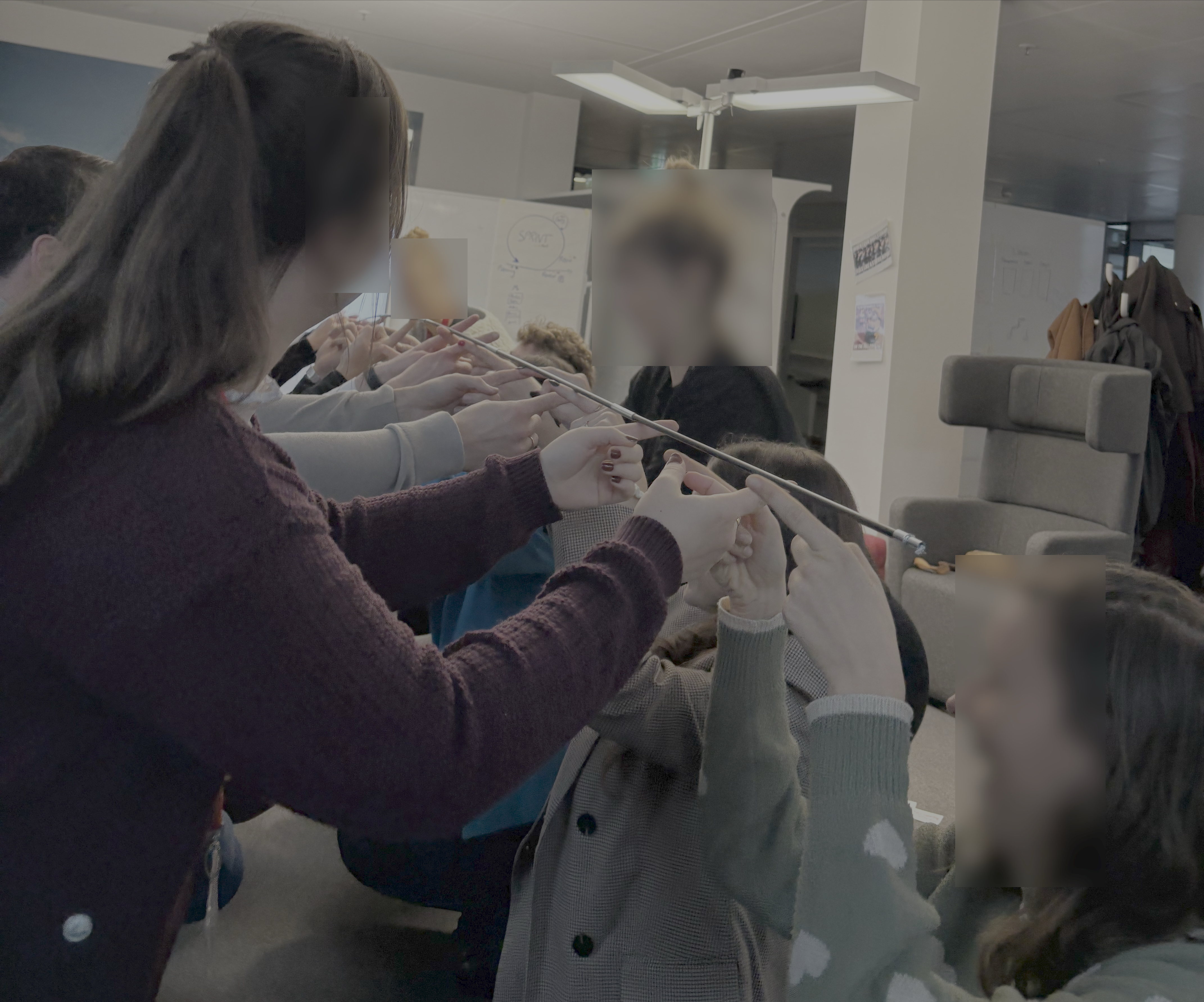
You bring a team together, give them a pole, and ask them to lower it to the ground. That is the basic idea. No complex simulation. No long instruction sheet. No elaborate business case. Just a simple physical task that everyone in the room immediately believes they can solve.
And then the room changes.
What looked trivial starts to become strangely difficult. People laugh at first, because the whole thing feels almost ridiculous. Then they get confused. Then the first little accusations appear. Someone insists they are doing exactly what they are supposed to do. Someone else looks around, trying to find the person who must be causing the problem. A few participants start giving instructions. Others become quiet. The group tries harder. The result does not improve.
That is the moment where the Pole Challenge becomes interesting.
Because suddenly, the exercise is no longer about the pole.
A Simple Task With a Strange Result
The fascinating thing about the Pole Challenge is not that people fail. People fail in workshop exercises all the time. The fascinating thing is how they fail.
The task seems clear. The goal seems shared. Nobody is trying to sabotage the group. Nobody misunderstands the basic objective. And still, the team often produces the opposite of what it wants.
That is why the exercise works so well in agile workshops, leadership trainings, and team development sessions. It creates a small, safe version of something that happens in organizations every day: intelligent people with good intentions create an outcome nobody wanted.
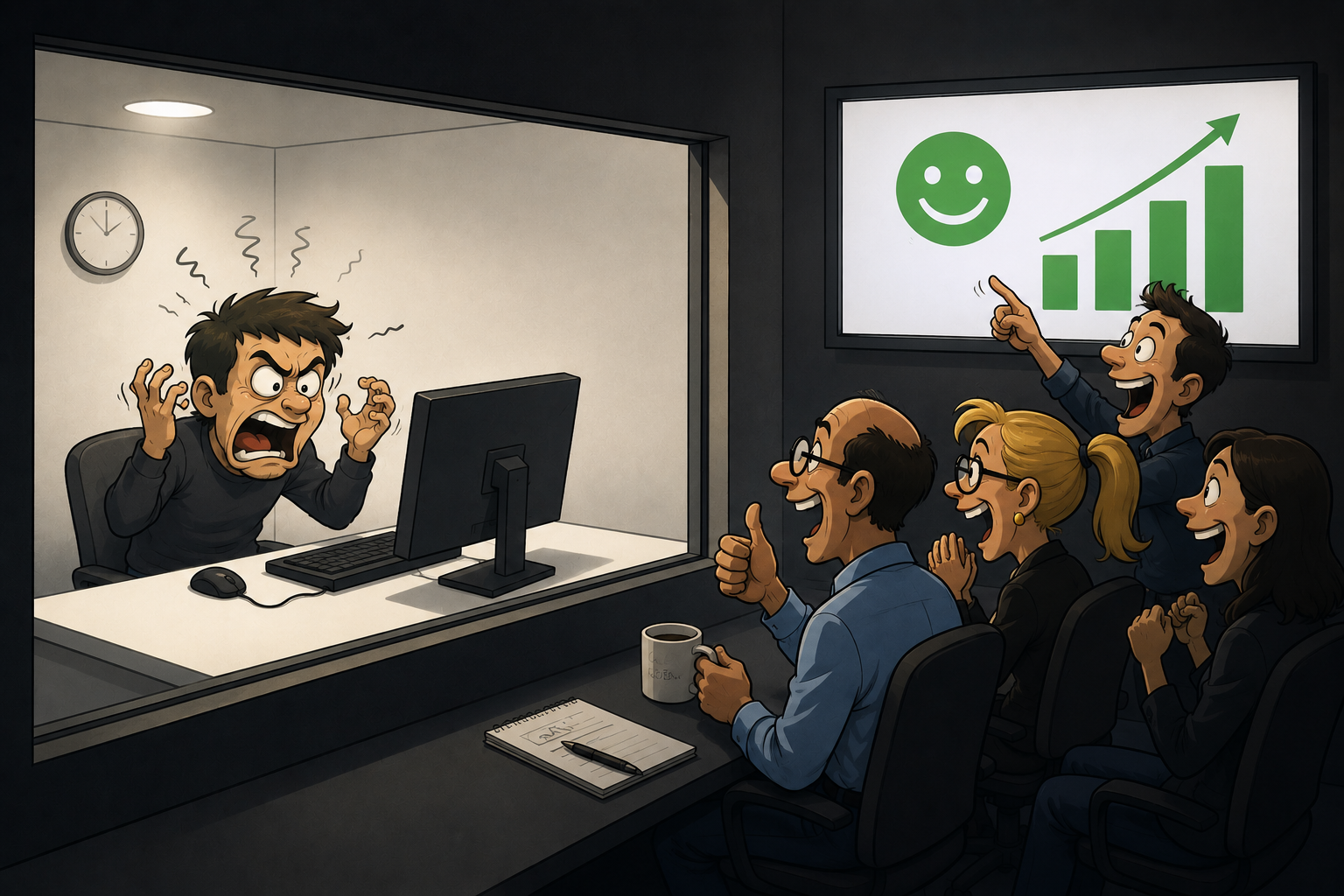
A team wants to move faster, so everyone optimizes their own part of the process. The handovers get worse. A manager wants more predictability, so they ask for more reporting. The team loses even more time. Departments want to hit their local targets, so they protect their own priorities. The customer experience suffers. Everyone can justify their behavior from their own perspective, and still the whole system moves in the wrong direction.
The Pole Challenge makes this pattern visible without a lecture.
Why Participants Remember It
Many team exercises produce polite insights. People nod, write something on a flip chart, and forget it by the next coffee break.
The Pole Challenge tends to stick.
Participants remember the weirdness of it. They remember the moment when the group was sure the task should be easy, but reality disagreed. They remember the sudden shift from laughter to frustration. They remember how quickly “we” can become “who is causing this?”
That emotional shift is useful. Not because we want to embarrass anyone, but because the group gets real material to work with. The debrief is not based on abstract theory. It is based on something that just happened in the room.
You can ask: What did you focus on? When did the group become more tense? What happened to communication under pressure? Who tried to lead? Who stopped contributing? Did the group slow down and observe, or did it just try harder? Where do we see the same pattern in our daily work?
Those questions are much more powerful when people have just lived through the pattern themselves.
The Real Topic Is Local Optimization
The Pole Challenge is a beautiful entry point into one of the most important ideas in teamwork and agility: local optimization.
Most organizational dysfunction does not come from stupid people doing obviously stupid things. It comes from people doing reasonable things in a system that rewards the wrong behavior.
That is why “just collaborate better” is usually useless advice. People already think they are collaborating. They already think they are helping. They already think they are doing their part.
The harder question is: Are our individual actions adding up to the outcome we actually want?
The Pole Challenge gives teams a physical experience of that question. It lets them feel the difference between individual effort and collective progress. It shows how quickly a shared goal can become fragmented into many small, local adjustments. It also shows how hard it can be to notice the system when everyone is busy managing their own tiny piece of it.
That is a much richer conversation than another generic teamwork slogan.
Why Facilitators Should Have This Exercise in Their Toolkit
For agile coaches, Scrum Masters, trainers, and workshop facilitators, the Pole Challenge is useful because it opens several doors at once. You can use it to talk about alignment, leadership, systems thinking, psychological safety, communication under pressure, conflicting goals, and the gap between intention and outcome.
It also works because it is concrete. You do not need to start with theory. You let the group experience something, then use that experience as a mirror. The room supplies the case study.
A Small Exercise That Opens a Big Conversation
The Pole Challenge is one of those exercises that looks small from the outside and becomes surprisingly rich once you know how to facilitate it. It creates energy, curiosity, irritation, laughter, and genuine insight in a short amount of time.
More importantly, it gives the group a shared metaphor they can return to later. When a team gets lost in dependencies, competing priorities, handovers, unclear ownership, or local goals, you can come back to the same question: Are we actually moving together, or are we all doing our own part while the system produces the wrong result?
That is why I included the Pole Challenge in my Agile Games Collection.
Inside the collection, I do not just describe the activity. I give you the facilitation structure behind it: how to introduce the exercise without spoiling it, what to observe while the group is working, how to guide the debrief, which questions unlock the deeper learning, and how to connect the experience to real workplace dynamics.
The exercise itself is simple. Getting the learning out of it is the craft.
Explore the Agile Games Collection here: matthiasorgler.com/games
Subscribe to The Agile Compass
Weekly articles, special offers, and a chance to interact with me via email. No spam. Unsubscribe anytime.
- Weekly articles
- The Agile Compass delivers fresh insights each week.
- No spam
- Unsubscribe anytime. We only send valuable content.